January – Mid-March
January – Mid-March
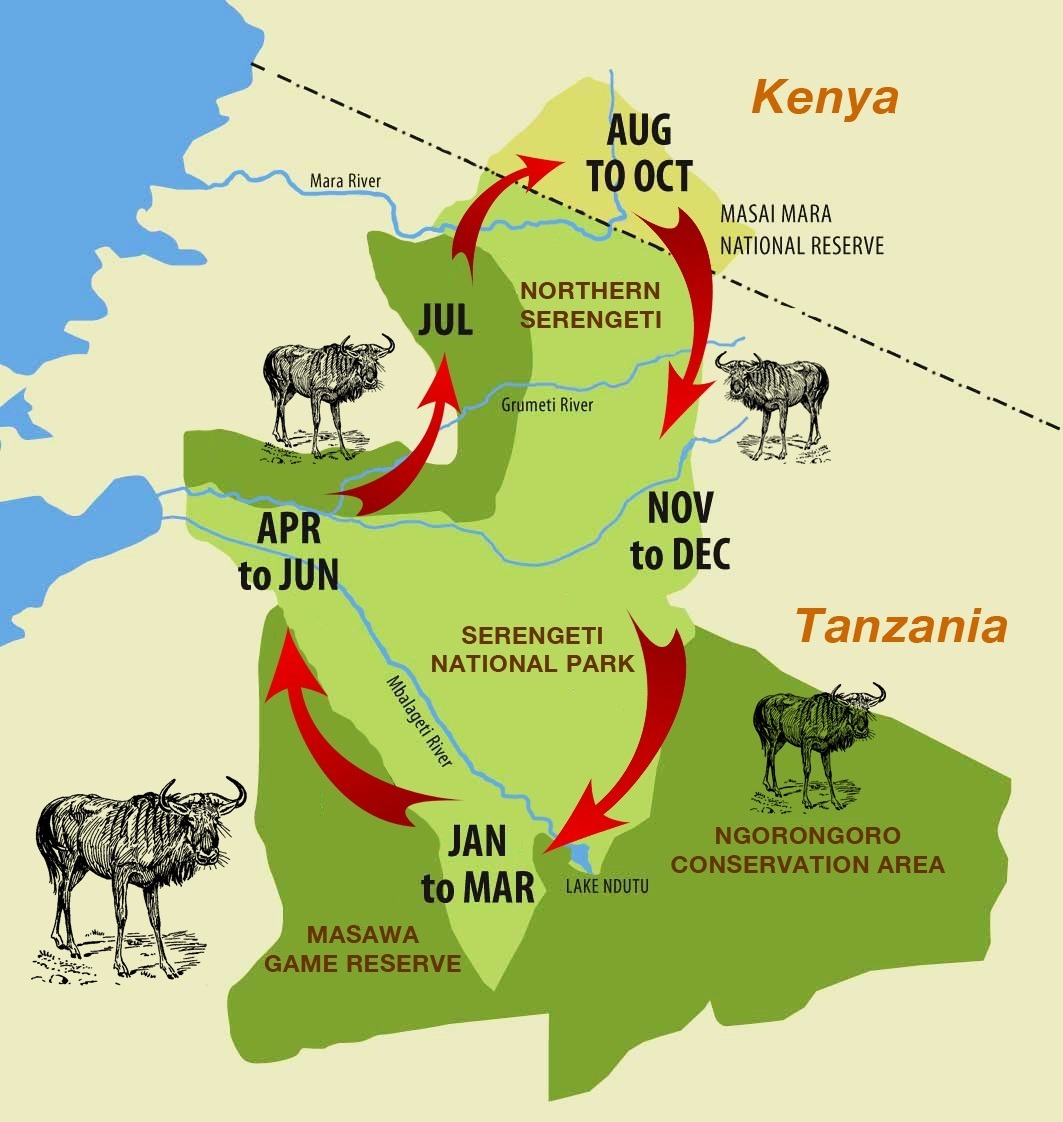
The calving season begins in January, with the massive herds gathering in the southern Serengeti plains near Ndutu and the Ngorongoro Conservation Area. During this period, over 8,000 wildebeest calves are born each day, attracting predators such as lions, hyenas, and cheetahs, creating one of nature’s most awe-inspiring displays of life and survival.
The calving season continues until mid-March. As the herds graze intensively, the southern plains start to show signs of dryness. Typically, the long rains arrive from mid-March to April, prompting the wildebeest and their now stronger calves to begin their northwesterly migration across the Serengeti.
April – May
April – May
From April to May, the Great Migration moves through central Serengeti, passing landmarks like the Moru and Simba Kopjes. Large herds migrate in long columns along the Western Corridor, following rivers such as the Mbalageti and reaching the Grumeti River, where the first major river crossings occur.
This period can be challenging due to seasonal rains, which sometimes make roads impassable. As a result, some smaller camps temporarily close, but witnessing the first river crossings is a thrilling highlight for adventurous travelers.
June – July
June – July
By June and July, the rains subside, and wildebeest and zebras gather into larger herds. This period coincides with the rutting season, where males compete fiercely for mating rights, creating dramatic displays of power and aggression.
As the herds push further north, they face the Grumeti River, a natural barrier with deep waters and crocodile predators. River crossings at this stage are tense and thrilling, with many animals risking their lives in search of greener pastures.
August
August
August is the peak period for river crossings as the herds move from the northern Serengeti toward the Maasai Mara in Kenya. The western plains turn golden, nudging the animals northward through the Lamai Wedge and the Mara Triangle, before they flood the lush Mara grasslands. The Mara River, teeming with crocodiles, provides one of the most dramatic spectacles of the migration.
September
September
By September, the herds begin to split into smaller groups. Most travel into the Maasai Mara to graze on fresh pastures, while a smaller portion remains in the northern Serengeti. Predators are abundant during this time, making it a prime month for witnessing thrilling predator-prey interactions in the Maasai Mara.
October
October
The Maasai Mara remains a popular destination, but being smaller than the Serengeti, it can get crowded. Private conservancies nearby offer a quieter alternative, where visitors can enjoy off-road game drives, walking safaris, and night drives, while supporting local Maasai communities.
November
November
The short rains trigger the wildebeest to leave the depleted Maasai Mara grasslands and return to the revitalized Serengeti. The herds move through the northeastern and central Serengeti, often splitting into smaller groups along the way. Timing varies depending on rainfall, so exact movements can be unpredictable.
December
December
By December, the herds reach the southern Serengeti plains, now lush and fertile after the rains. With abundant grass, the wildebeest feed and recover in preparation for the next calving season in January, ready to start the 800-kilometer journey of the Great Migration once again.